
BACK
The Legend of Ergenekon - The Great Exodus
4
MIN READING
The Ergenekon Legend is one of the most significant foundation myths in Turkic mythology, symbolizing rebirth, resilience, and the eternal spirit of the Turkic peoples.
The Story:
According to the legend, after suffering a devastating defeat in battle, the surviving Turkic people fled to a hidden mountain valley called Ergenekon (meaning "steep slope" or "rugged land"). This narrow valley, surrounded by towering mountains, became both their refuge and their prison.
Over the centuries, the Turkic people lived in this isolated valley, their population growing but trapped by the natural barriers. The only exit was blocked by massive iron mountains that seemed impossible to pass.
The Great Breakout:
After 400 years of isolation, the Turkic tribes decided they must break free. Led by their wisest leaders and most skilled blacksmiths, they devised a legendary plan:
They gathered all the wood in the valley and built enormous forges and fires against the iron mountains. For days and nights, they kept the fires burning at their hottest, heating the iron until it began to glow red and melt.
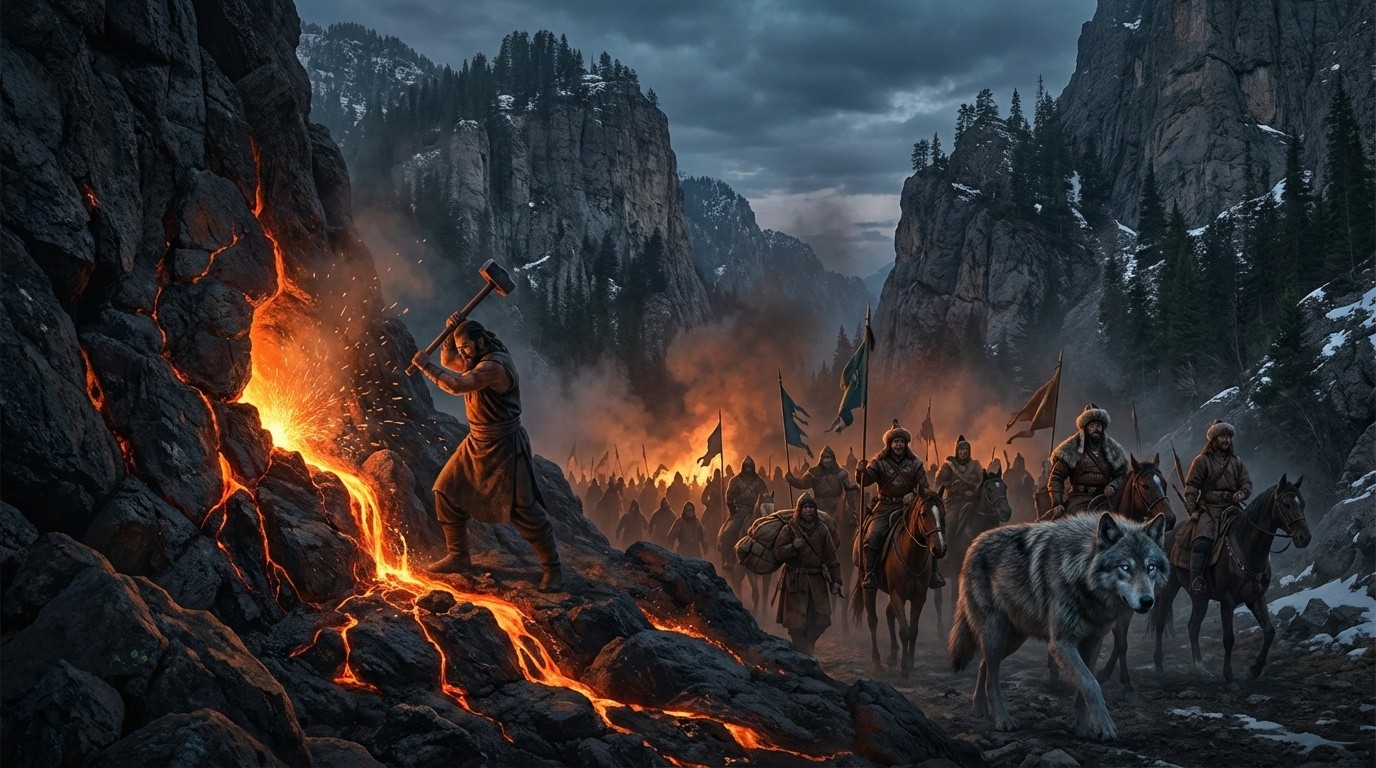
When the iron was molten and weakened, a great blacksmith struck it with a mighty hammer, creating a breach. The molten metal flowed like rivers of fire down the mountainside, and finally, a passage opened.
The Sacred Wolf:
According to some versions, a gray wolf (connecting to the Asena legend) led the people out of Ergenekon, showing them the path to freedom. The wolf remained an eternal symbol of guidance and protection for the Turkic peoples.
The Rebirth:
Emerging from Ergenekon, the Turkic people spread across the Central Asian steppes, eventually founding great empires and kingdoms. The breakout from Ergenekon symbolizes:
National rebirth and renewal
Freedom from oppression
The indomitable spirit of the Turkic people
Unity through hardship
Historical Significance:
The Ergenekon legend has been interpreted as a metaphor for various historical events - from the early migrations of Turkic peoples to periods of national struggle and renaissance. It remains a powerful symbol of resilience and hope in Turkic culture to this day.