
BACK
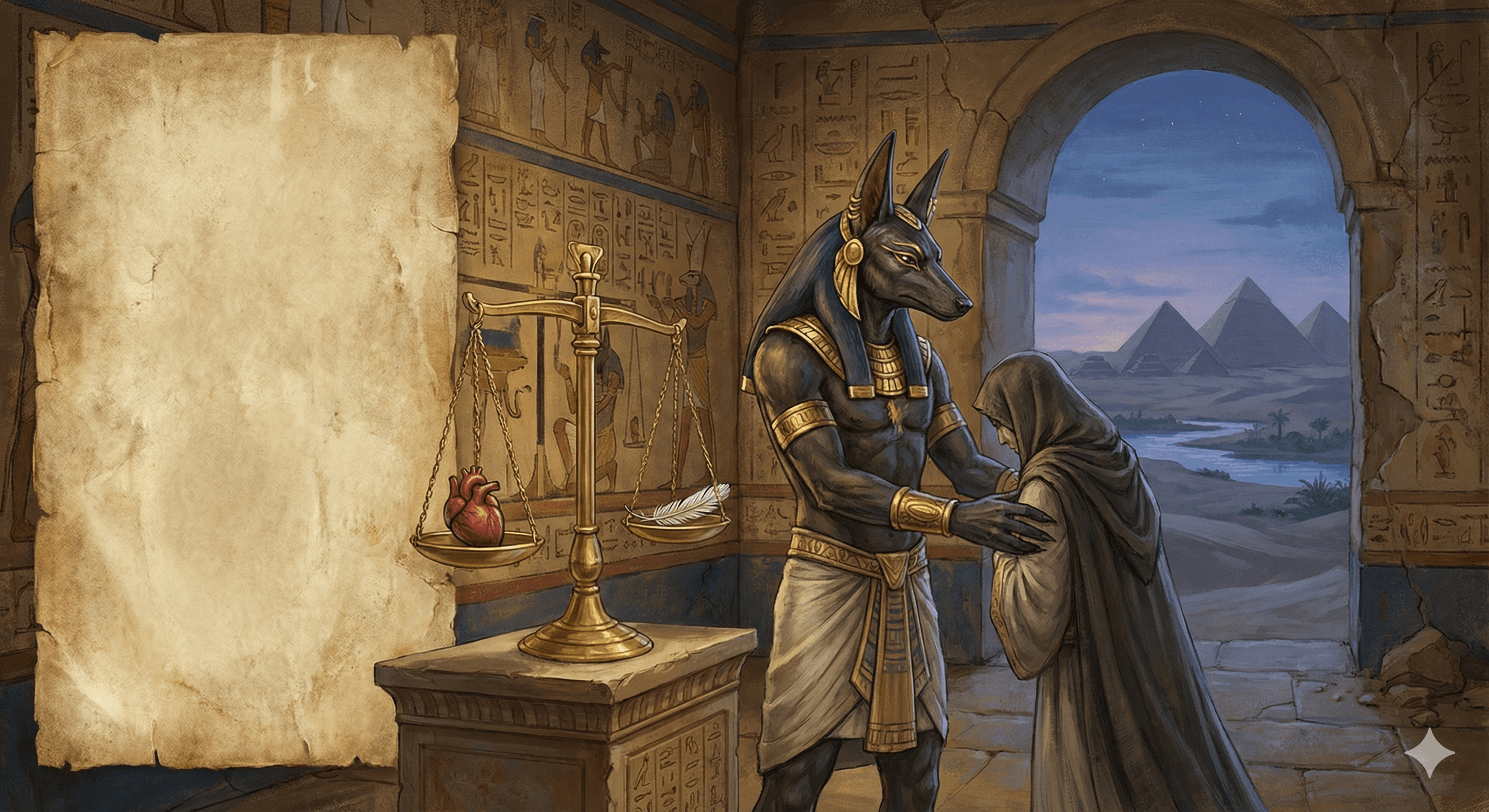
Anubis: The Guardian of the Scales
4.5
MIN READING
In ancient Egyptian mythology, Anubis is the god of mummification, the afterlife, and the protection of the dead. He is one of the oldest gods in the Egyptian pantheon and is most commonly depicted as a man with the head of a black jackal—an animal associated with cemeteries and the desert.
According to myth, Anubis was the son of Osiris, the god of the underworld, and Nephthys. When Osiris was murdered by his brother Seth, Anubis played a crucial role in restoring his body. He invented the art of mummification, carefully wrapping Osiris so that his soul could live on in the afterlife. Because of this, Anubis became the eternal guardian of burial rituals.
Anubis was also known as the guide of souls. After death, he would lead the deceased into the Hall of Judgment, where the heart of the soul was weighed against the feather of Ma’at, the symbol of truth and balance. If the heart was lighter than the feather, the soul was allowed to pass into eternal life. If it was heavier, it was devoured by the monster Ammit. Anubis oversaw this ritual silently and impartially, ensuring cosmic justice.
Over time, Anubis became a symbol of protection, transition, and moral balance. Rather than being a god of death itself, he represented the threshold between life and the afterlife, watching over souls during their most vulnerable journey.
If you want, I can rewrite this in a more poetic, mystical, or modern storytelling tone—perfect for a website or creative project.