
BACK
The Story of Amaterasu
17
MIN READING
In Japanese mythology, Amaterasu is the Sun Goddess and one of the most important deities in Shinto belief. She represents light, order, life, and harmony—and her story explains why darkness exists, and how it can be overcome.
Amaterasu ruled the heavens, bringing warmth and light to the world. But her brother, Susanoo, the storm god, was violent and unpredictable. In a fit of rage, he caused chaos in her sacred lands, destroying crops and committing sacrilegious acts.
Deeply hurt and ashamed, Amaterasu withdrew from the world and hid herself inside a cave called Amano Iwato. When she disappeared, the sun vanished with her. Darkness spread across the land, crops failed, and evil spirits began to roam freely.
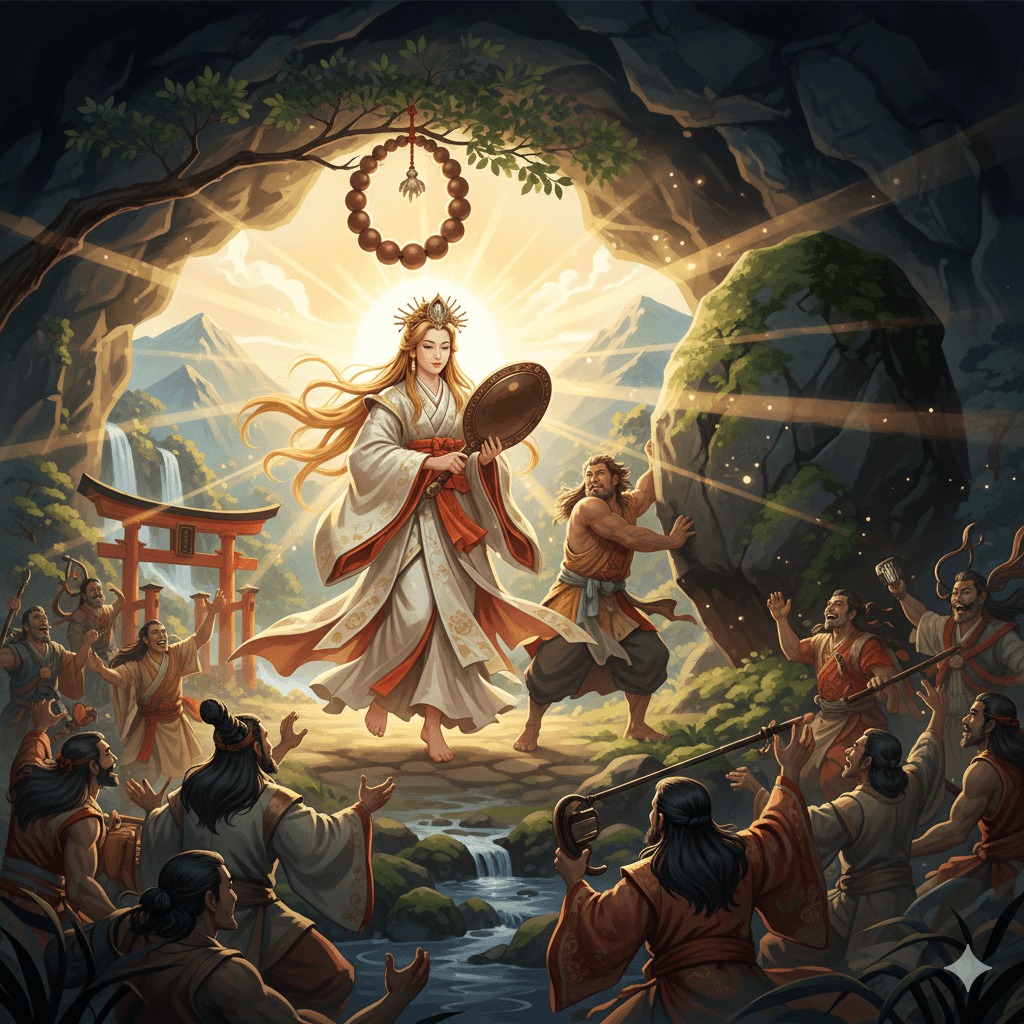
The gods gathered to find a way to bring her back. They created a celebration outside the cave—music, laughter, and dance. The goddess Ame-no-Uzume performed a joyful and outrageous dance, making the other gods laugh loudly.
Curious about the noise, Amaterasu slowly peeked out of the cave. The gods showed her a mirror, and as she saw her own radiant reflection, she stepped outside. At that moment, the cave was sealed behind her, and sunlight returned to the world.
Amaterasu resumed her place in the sky, restoring balance and life. Her light was not forced—it returned through joy, community, and curiosity, not violence.
This myth teaches that even the greatest light can retreat—but it can also be gently invited back. Amaterasu symbolizes hope after isolation, harmony after chaos, and the quiet power of renewal.