
BACK
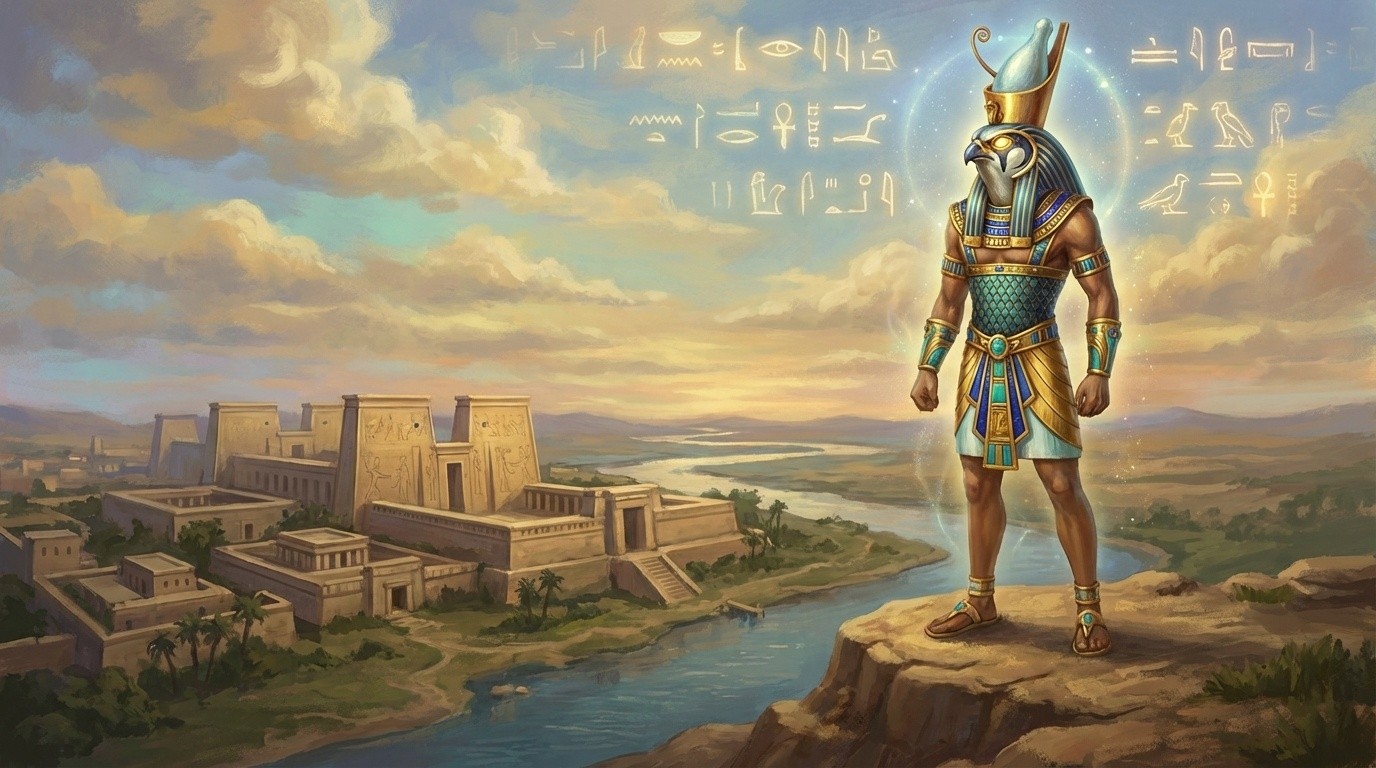
The Legend of Horus: The Prince of the Sky
4
MIN READING
Long ago, Egypt was ruled by the wise King Osiris. The land was green and peaceful until his brother, Set, the god of storms and chaos, grew consumed by jealousy. Set murdered Osiris, tore his body into pieces, and scattered them across Egypt to seize the throne for himself.
The Secret Birth
Hidden away in the marshes of the Nile Delta, Isis (the wife of Osiris) used her powerful magic to protect her newborn son, Horus. She knew that if Set found out about the boy, he would kill him instantly. Horus grew up in the shadows, training his mind and body, fueled by a single goal: to reclaim his father’s kingdom.
The War of the Gods
When Horus reached manhood, he stepped out of the shadows and challenged his uncle Set before the council of the gods. What followed was a brutal war that lasted eighty years. They fought as men, as hippopotamuses, and as giants.
The most famous moment happened during a fierce duel: Set ripped out Horus’s left eye. As Horus lay wounded, the god of wisdom, Thoth, gathered the broken pieces of the eye and healed it using moonlight. This restored eye became the Eye of Horus (Wedjat), a symbol so powerful it could see everything in the universe.
The Final Victory
Eventually, the gods realized that Set’s chaos could not rule forever. Horus, with his restored strength and his mother's guidance, finally defeated Set in a final battle at Edfu.
Horus did not just win a throne; he restored Ma’at (divine balance) to the world. He became the first "Pharaoh," the bridge between the heavens and the earth. From that day on, he soared high above Egypt as a golden falcon, his wings stretching across the sky, his eyes watching over every king that would ever rule the Nile.