
BACK
Kukulkan: The Feathered Serpent
2.5
MIN READING
The Symbol of Two Worlds
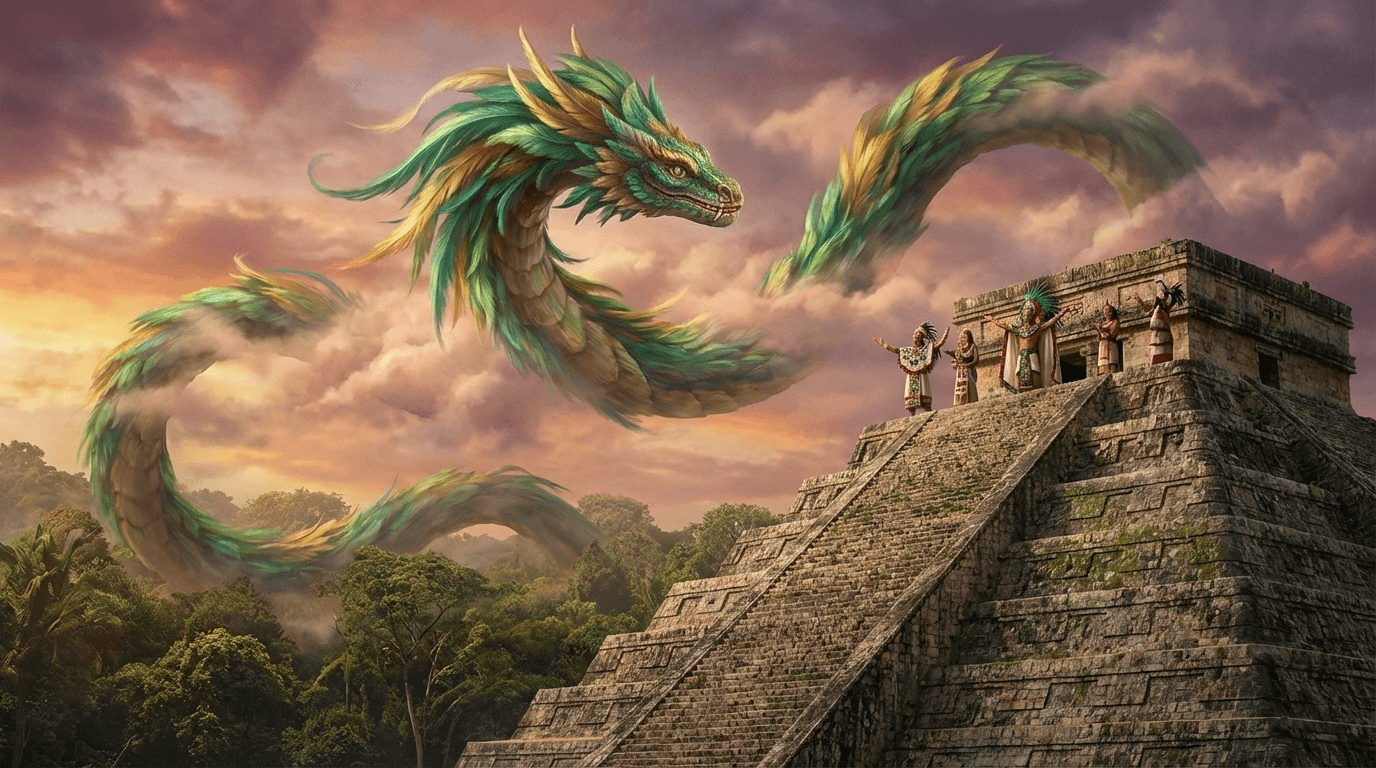
Kukulkan is one of the most important gods in Maya culture. He is a Feathered Serpent—a giant snake covered in the beautiful green feathers of the Quetzal bird.
The Serpent represents the Earth and human nature.
The Feathers represent the Sky and the divine spirit. By combining both, Kukulkan represents the bridge between heaven and earth.
The Creator and Teacher
According to legend, Kukulkan did not just live in the temples; he was a teacher to the Mayan people. It is said that he brought the calendar to the Maya and taught them how to grow maize (corn), which was their most important food. He was also the master of the winds and the god of the four elements.
The Shadow on the Stairs
The most famous "real-world" part of his story happens at the great pyramid of Chichen Itza. The Maya were such brilliant astronomers that they built the pyramid (El Castillo) to honor Kukulkan’s movement.
During the Spring and Autumn equinoxes, the sun hits the stairs of the pyramid in a specific way. It creates a series of triangular shadows that look like a giant snake crawling down the temple. This "Shadow of the Serpent" was a sign to the people that Kukulkan was descending from the heavens to bless the earth and the upcoming harvest.
The Departure
The myth says that Kukulkan eventually left the Maya, sailing away into the Eastern Sea on a raft made of snakes. But he promised that one day, he would return to his people. This "Return of the God" became a central part of Mesoamerican prophecy for centuries.The Symbol of Two Worlds
Kukulkan is one of the most important gods in Maya culture. He is a Feathered Serpent—a giant snake covered in the beautiful green feathers of the Quetzal bird.
The Serpent represents the Earth and human nature.
The Feathers represent the Sky and the divine spirit. By combining both, Kukulkan represents the bridge between heaven and earth.
The Creator and Teacher
According to legend, Kukulkan did not just live in the temples; he was a teacher to the Mayan people. It is said that he brought the calendar to the Maya and taught them how to grow maize (corn), which was their most important food. He was also the master of the winds and the god of the four elements.
The Shadow on the Stairs
The most famous "real-world" part of his story happens at the great pyramid of Chichen Itza. The Maya were such brilliant astronomers that they built the pyramid (El Castillo) to honor Kukulkan’s movement.
During the Spring and Autumn equinoxes, the sun hits the stairs of the pyramid in a specific way. It creates a series of triangular shadows that look like a giant snake crawling down the temple. This "Shadow of the Serpent" was a sign to the people that Kukulkan was descending from the heavens to bless the earth and the upcoming harvest.
The Departure
The myth says that Kukulkan eventually left the Maya, sailing away into the Eastern Sea on a raft made of snakes. But he promised that one day, he would return to his people. This "Return of the God" became a central part of Mesoamerican prophecy for centuries.