
BACK
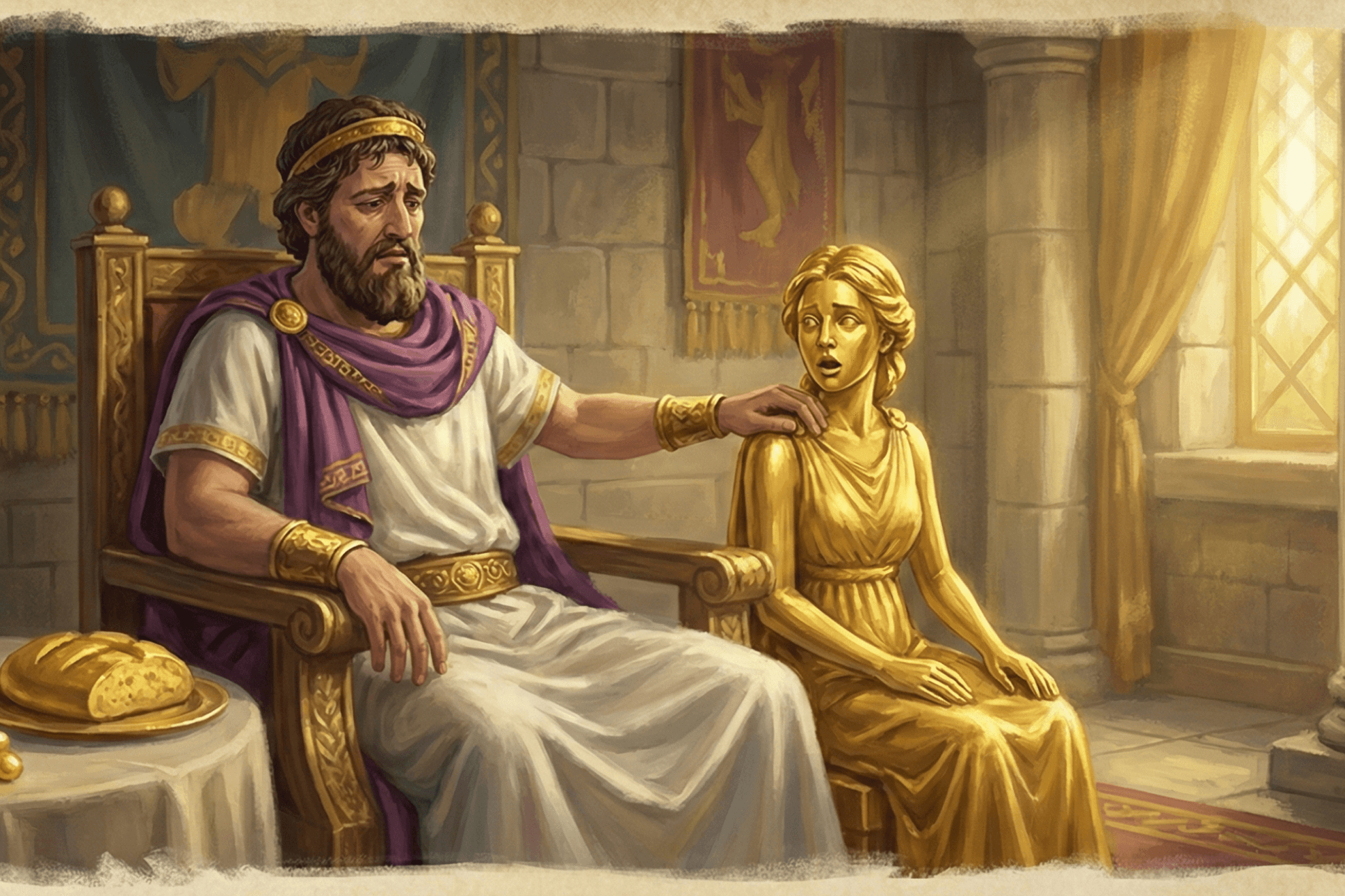
King Midas and his Golden Touch
4
MIN READING
The Gift of a God
The story begins with a gesture of hospitality. Midas, the wealthy King of Phrygia (located in your ancestral lands of Anatolia), found a wandering, drunken satyr in his rose gardens. This was Silenus, the mentor of the god Dionysus. Instead of punishing him, Midas treated him with kindness and hosted him for ten days of feasting.
When Dionysus came to retrieve his companion, he was so grateful to Midas that he offered to grant the King any wish he desired. Midas, already wealthy but driven by a hunger for more, did not hesitate. He asked that everything he touched be turned into gold. Dionysus, knowing the danger of the request but bound by his word, granted the wish.
The Radiance of Disaster
At first, Midas was ecstatic. He walked through his palace, touching the pillars, the doors, and the statues. As each one turned into solid, shimmering gold, he felt like the most powerful man in history. He went to his garden and touched the roses; they became stiff, golden ornaments, cold to the touch but brilliant to the eye.
However, the "blessing" quickly revealed its dark side. When Midas sat down to eat, he found that he could no longer sustain himself. As soon as his lips touched the bread, it became a golden brick. When he tried to drink wine, it turned into molten metal in his throat. He was the richest man in the world, yet he was starving and parched.
The tragedy reached its peak when his beloved daughter ran to comfort him. Instinctively, Midas reached out to hug her. The moment his hands touched her skin, her laughter silenced, and she was transformed into a lifeless, golden statue. In his pursuit of wealth, Midas had accidentally destroyed the only thing he truly loved.
The Washing Away of Greed
Desperate and weeping, Midas prayed to Dionysus to take back the gift. The god, moved by the King’s genuine repentance, told him to go to the Pactolus River (near the ancient city of Sardis) and wash himself in its waters.
Midas ran to the river and plunged into the current. As he did, the golden power flowed out of his body and into the riverbed. The legend says that this is why the sands of the Pactolus were famous for their gold dust. When Midas returned home, he found his daughter restored to life and his food once again edible. He spent the rest of his days living a simple life in the countryside, having learned that the most precious things in life—love, nature, and breath—cannot be measured in gold.