
BACK
Ergenekon: The Resurrection and the Golden Guide
3
MIN READING
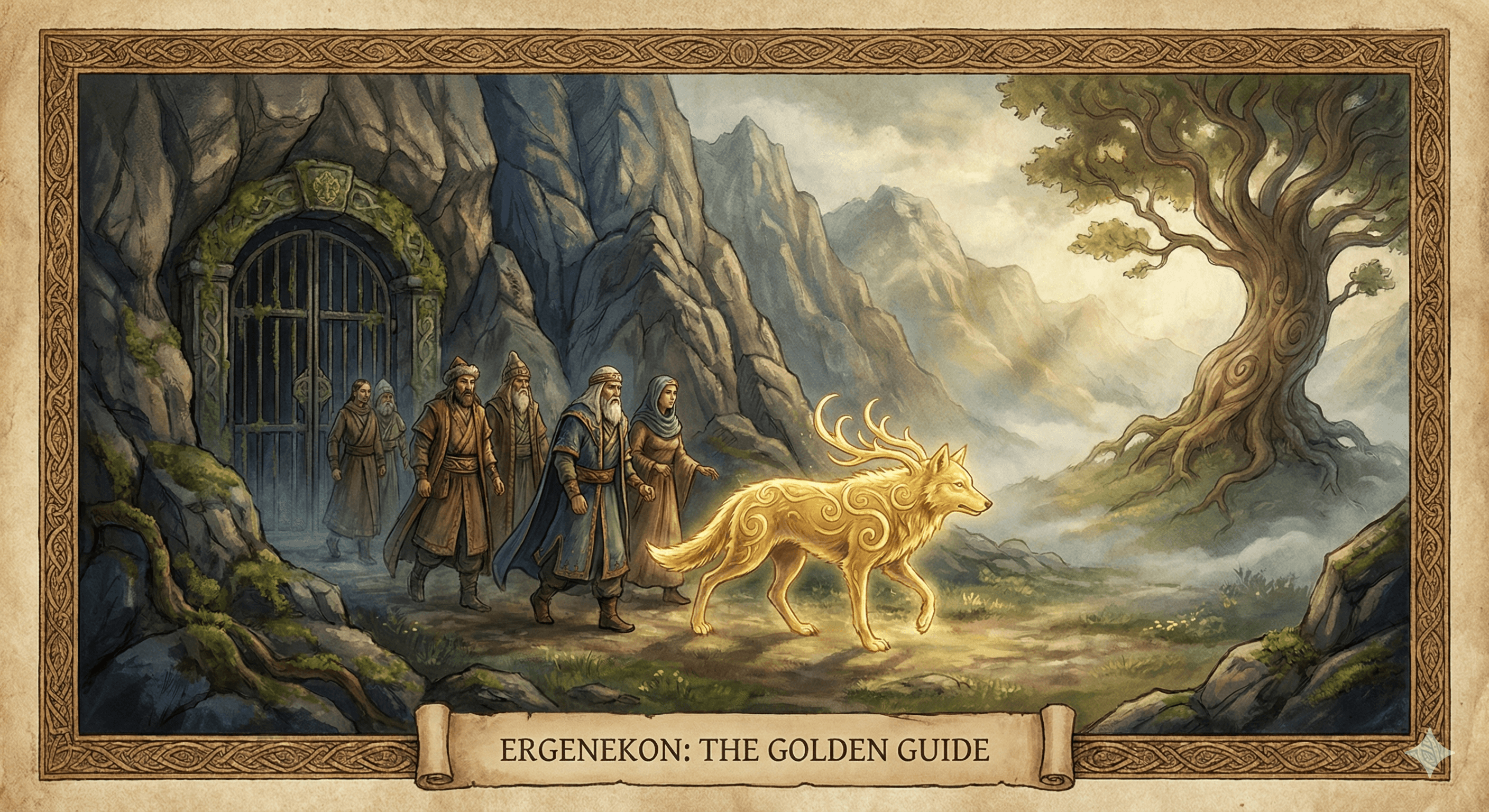
The Valley of Refuge After a great defeat in battle, only two families of the Turkic people survived. They sought a place where they could live in peace and rebuild their strength. Led by the wisdom of their ancestors, they found a hidden valley surrounded by high, impregnable mountains made of iron. This place was called Ergenekon (meaning "a steep mountain ridge"). For four hundred years, they lived in this paradise, multiplying and growing strong, until the valley could no longer hold them. They wanted to return to the world of their ancestors, but they were trapped by the iron mountains that had once protected them.
The Melting of the Mountain The people searched for a way out but found none. Then, a blacksmith noticed that one part of the mountain was made of iron ore. He suggested that if they melted the iron, they could create a path. They gathered massive amounts of wood and coal, placing them at the foot of the mountain. Seventy bellows were set up in seventy places. When the fires were lit, the mountain of iron glowed red and finally melted, opening a passage wide enough for a loaded camel to pass through.
The Blue Wolf (Asena) Even with the path open, the people were lost; they did not know the way back to their ancestral lands. At that moment, a magnificent Celestial Wolf (Gökbörü/Asena) with shimmering blue fur appeared at the mouth of the cave. The wolf looked back at the people and began to run. Following the lead of this divine guide, the Turkic people emerged from the dark mountains and spread across the vast steppes once again. This day, the 21st of March (Nevruz), became a symbol of new beginnings and freedom.